The Lighthouse of Chania: Sentinel of the Sea, Symbol of the Soul
A Beacon Through Time
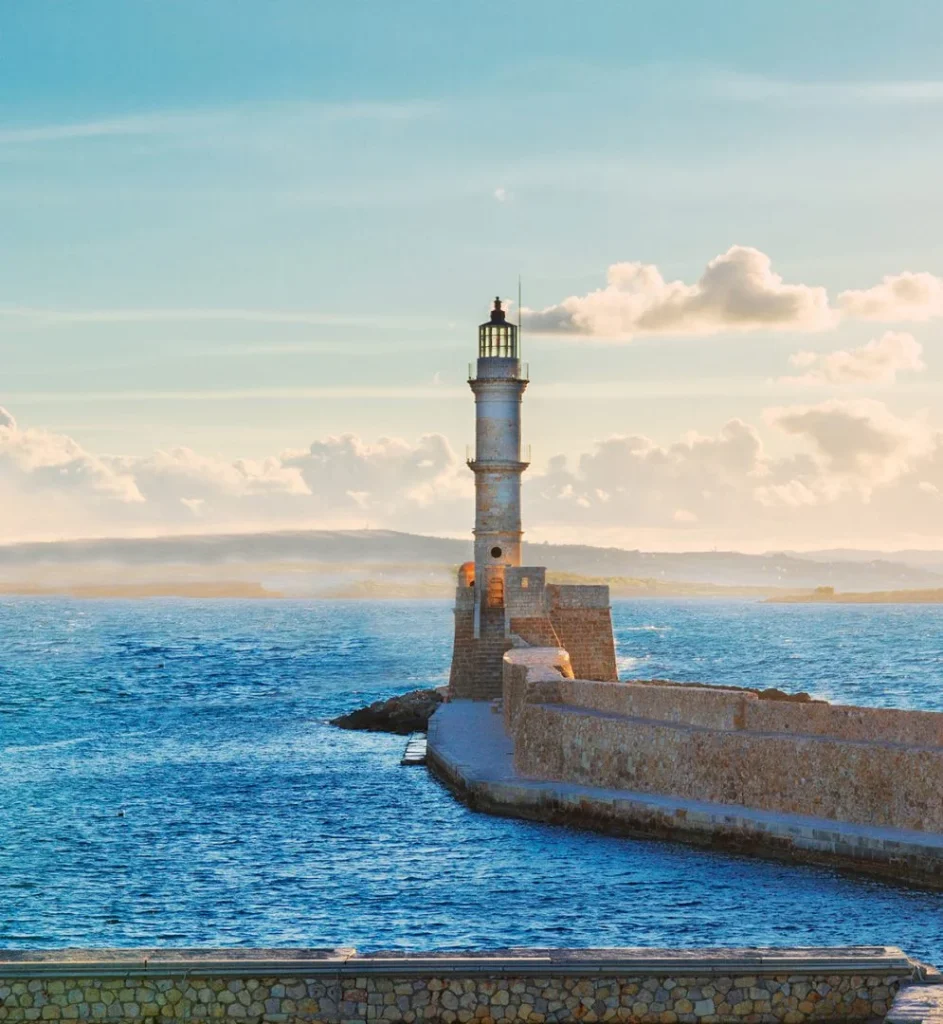
If there’s one landmark that defines the soul of Chania, it is without a doubt the majestic Venetian lighthouse that rises proudly at the entrance of the harbor. Ask anyone born or raised here, and they’ll tell you: this elegant stone sentinel is more than a monument — it’s part of our identity. A constant presence through centuries of change, it reminds us of home, resilience, and beauty.
From Venetian Strategy to Iconic Structure
To understand how this iconic structure came to be, we step back to a time when Venice ruled the Mediterranean. Having occupied Crete, the Venetians recognized its strategic position and its value for trade and naval dominance.
Plans for a fortified port and lighthouse were first recorded in 1302, but it wasn’t until 1595–1601 that the lighthouse was finally constructed. Originally lit by an open flame and adorned with the Venetian Lion of St. Mark, it served as a beacon of commerce and defense. During naval threats, a chain could be stretched from the lighthouse to Firkas Fortress, designed to break the hulls of enemy ships.
Abandonment and Revival
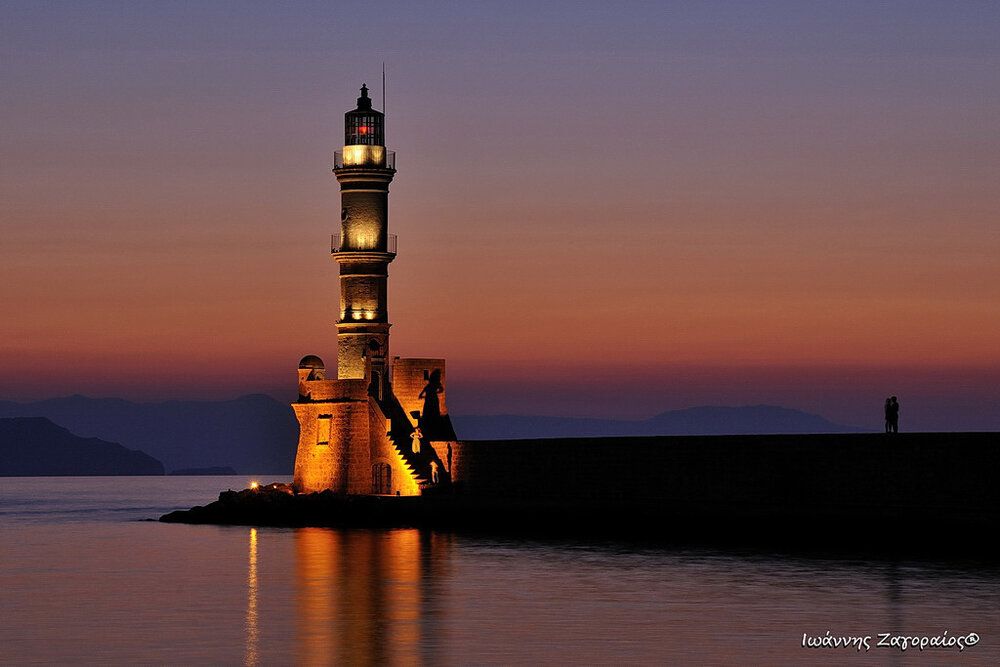
When the Ottoman Empire seized Chania in 1645, the lighthouse fell into disrepair, as the Ottomans favored the natural deep-water port of Souda. It remained largely abandoned until the Egyptian period (1830–1840), when the town was temporarily granted to the Egyptians as thanks for their support in suppressing the Greek Revolution of 1821.
In that decade, major infrastructure improvements were made, including the full restoration of the port and lighthouse. A staggering 1,146,000 piasters (equal to 11,460 golden Ottoman lira) was invested to rebuild and reinforce the harbor.
A Masterpiece of Architectural Fusion
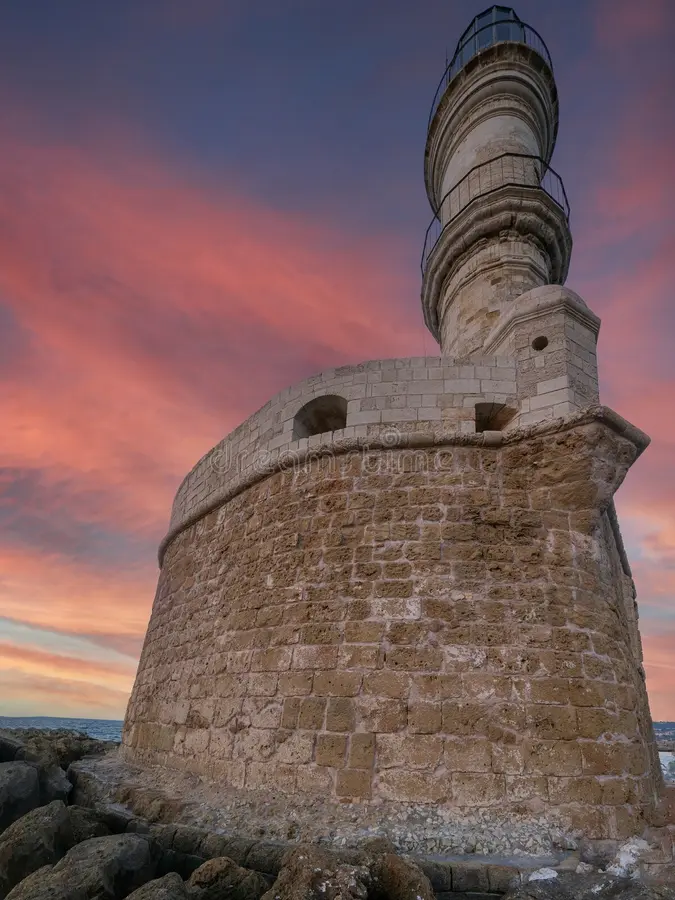
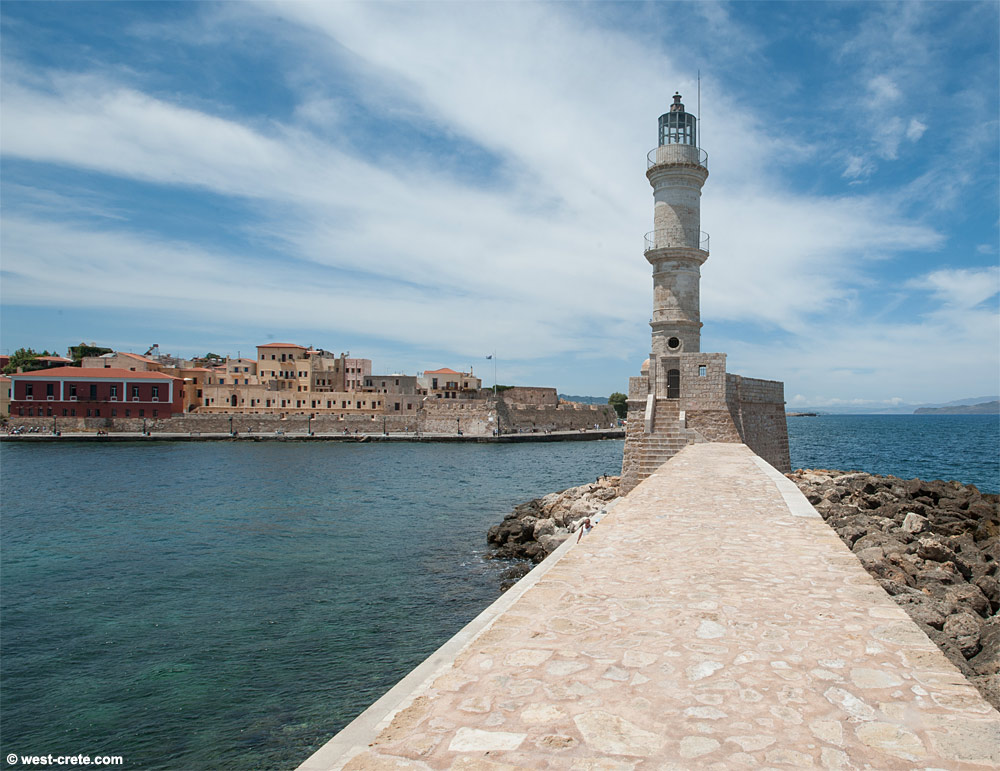
The lighthouse took on a three-part form during its Egyptian reconstruction: an octagonal base, a sixteen-sided midsection, and a cylindrical top, all designed to endure harsh coastal weather. This blend of Venetian, Ottoman, and Egyptian influences makes it one of the most architecturally unique and oldest functioning lighthouses in the world.
Its light, visible for over 7 miles (11.2 km), no longer requires a keeper due to its proximity to the harbor, though a small tile-roofed keeper’s house once stood at its base until it was removed in 1967. The original lighting mechanism was destroyed during the German occupation in WWII, and a red beacon was installed in 1945. The lighthouse underwent its most recent restoration in 2005.
A Symbol That Never Sleeps
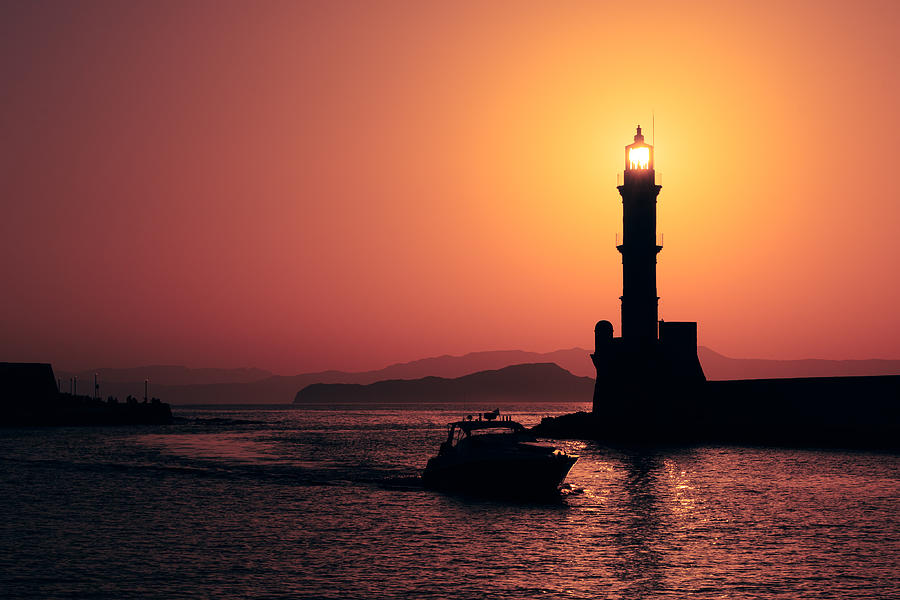
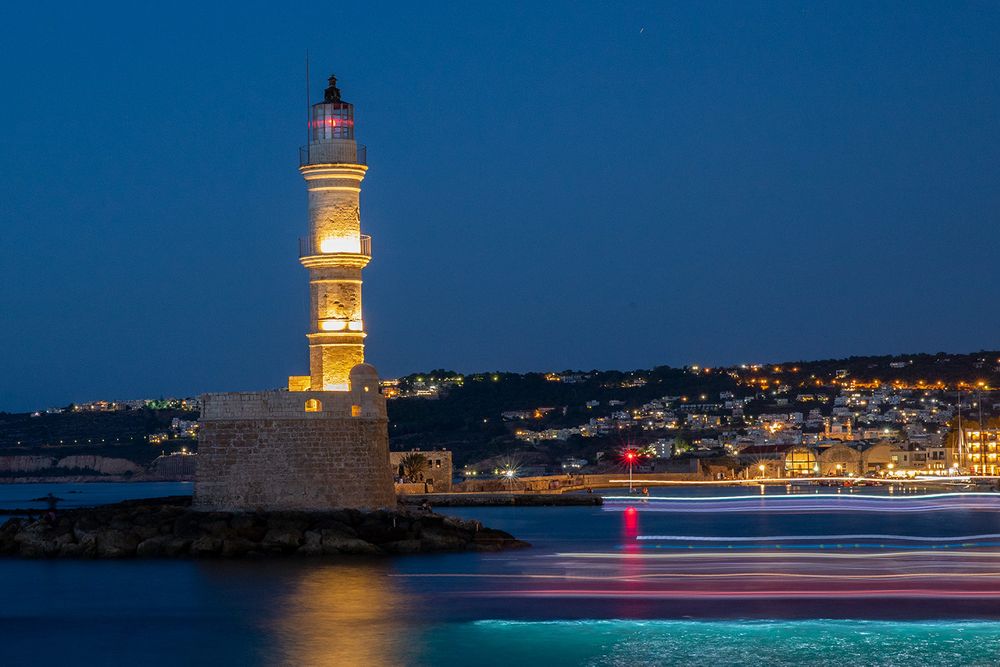
Today, the Lighthouse of Chania is not only a historical marvel — it is one of the most photographed lighthouses in Europe, and a must-see for romantics, history lovers, and dreamers alike.
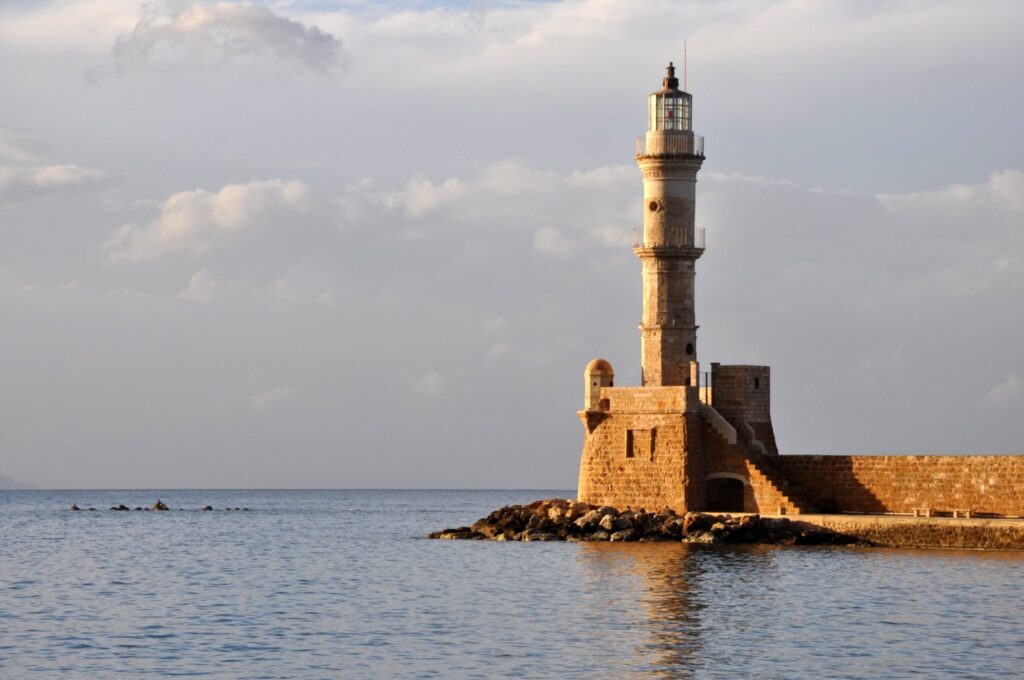
At sunset, it glows with golden amber light. By night, the lighthouse stands tall in its “evening gown,” emitting a rhythmic red flash — a signal of safety and heritage.
A Personal Connection
For me, this lighthouse is more than a landmark. It’s my anchor. When I’m far from home, it’s the image I dream of most. I remember the first time I walked to its base — how tall it stood, and how safe I felt there.
When I need time to reflect, I walk toward it again. I gaze south to the White Mountains, and north to the open Cretan Sea, and I’m reminded of who I am and where I belong.
No matter where I travel, this view — this lighthouse — always brings me back home.
Planning to Visit the Lighthouse?
- Go early morning for quiet reflection or at sunset for unforgettable photos
- Bring a camera, good walking shoes, and a jacket in the cooler months
- Don’t miss the view from the breakwater path, especially at twilight
- Pair your walk with a visit to Firkas Fortress for a deeper dive into Chania’s Venetian history

The Monster in the Labyrinth…

From Ancient Bull-Leaping Rituals to Modern Acts of Courage
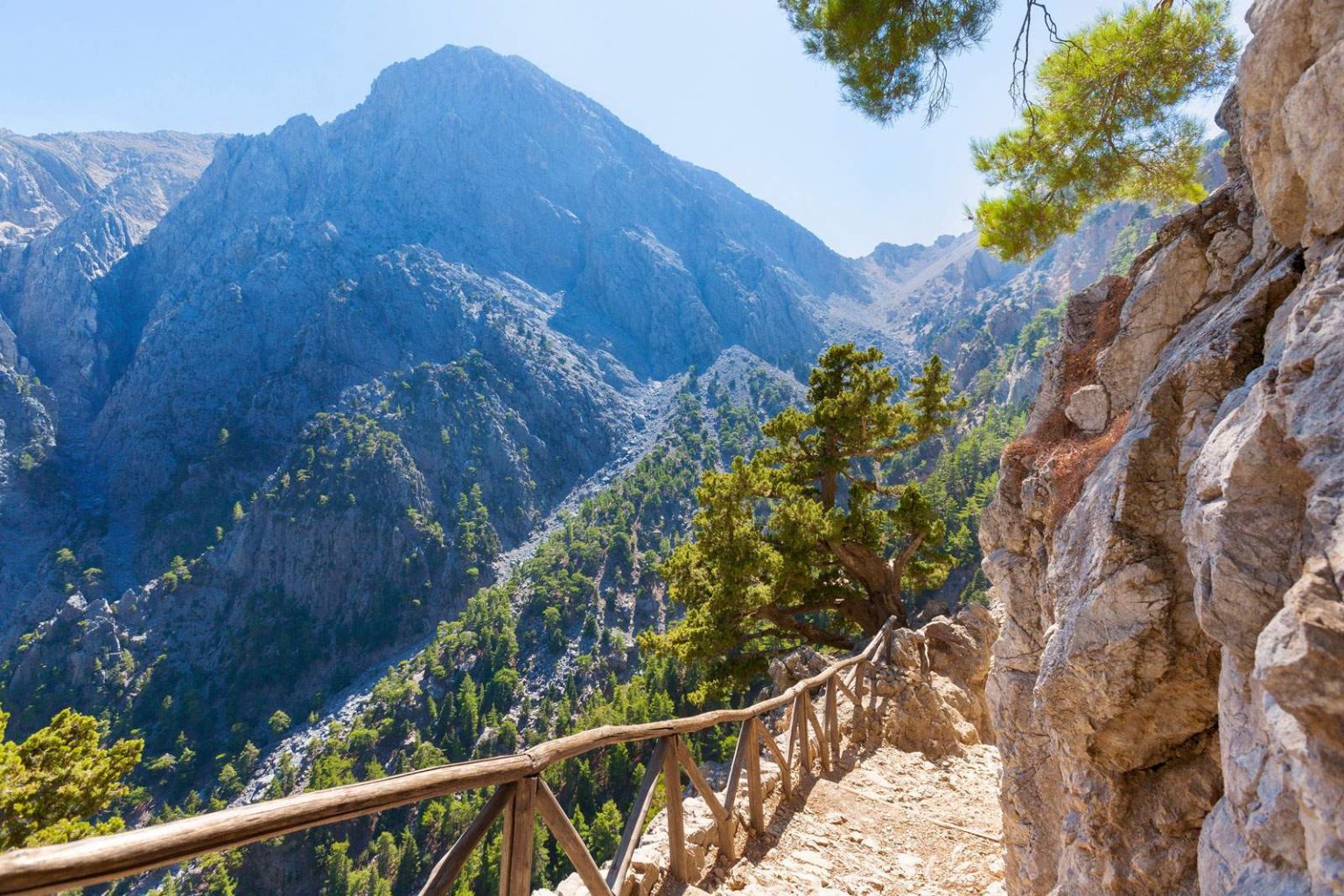
There’s a place in southern Crete where nature’s scale is so immense, it feels almost sacred…