Samaria: The Gorge That Defied Empires
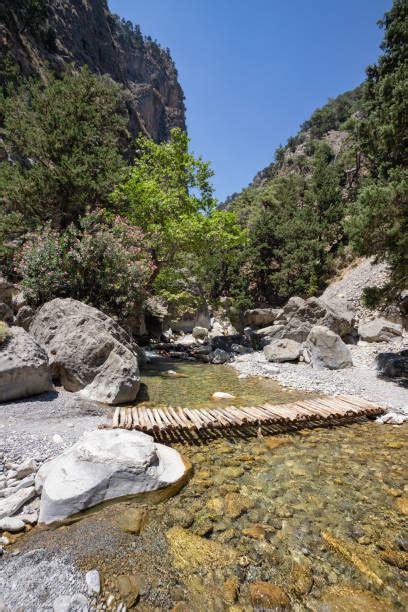
There’s a place in southern Crete where nature’s scale is so immense, it feels almost sacred. A towering canyon of jagged cliffs, icy streams, and alpine greenery, Samaria Gorge isn’t just Europe’s southernmost gorge — it’s Crete’s natural fortress, a silent witness to centuries of struggle, and the soul of the island’s resistance.

A Natural Wonder with a Fierce Past
Stretching over 16 kilometers from the Omalos Plateau to the Libyan Sea, Samaria Gorge is the longest gorge in Europe and a UNESCO-listed national park. Thousands of trekkers each year hike its dramatic length, marveling at the towering rock faces, endemic flora, and elusive Kri-Kri goats. But behind its raw beauty lies a powerful history few tourists realize — a legacy of freedom fighters, hidden villages, and battles against foreign powers.

The Hidden Village of Samaria
Deep in the gorge lies the now-abandoned village of Samaria, once home to locals who lived in isolation, surrounded by nature’s protection. Stone houses, a chapel, and narrow paths still stand, quietly echoing with memories of those who lived and resisted here.
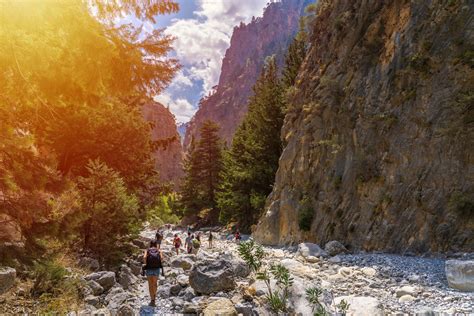
The village was a sanctuary — a place where Cretan rebels, fugitives, and families escaping vendettas could vanish into the mountains. The geography itself was their greatest ally: sheer cliffs, serpentine trails, and narrow passes that thwarted even the fiercest invaders.
A Stronghold of Cretan Resistance
Throughout history, Samaria Gorge became a legendary escape route and battleground:
- In 1319, a scandal involving a Venetian soldier and a local girl, Chrysomallousa, sparked a deadly uprising. Her father and fiancé escaped through the gorge to evade retribution.
- In 1608, the so-called “Chicken War” began when Venetians imposed a live-chicken tax. Locals protested by delivering a single egg, then disappeared into the gorge to escape punishment.
- In 1770, Daskalogiannis led a revolt against the Ottomans. As reprisals escalated, women and children sought refuge in Samaria. Many were tragically ambushed — their loss a symbol of Cretan sacrifice and resilience.
- Even in the 20th century, the gorge sheltered families fleeing blood feuds, with some adopting new names and lives far from their origins.
More Than Just a Hike
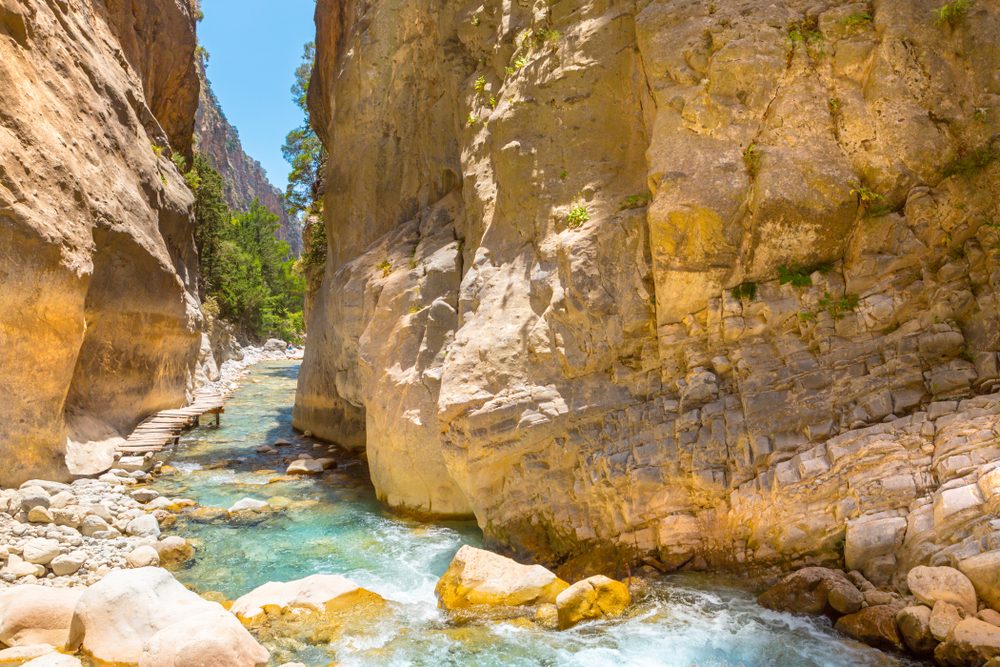
Today’s visitors to Samaria may focus on the scenic trail — the narrow Iron Gates, the cooling streams, the wildflowers in spring. But for locals, the gorge is sacred ground. It’s a living monument to the Cretan spirit — fierce, proud, and unbreakable.
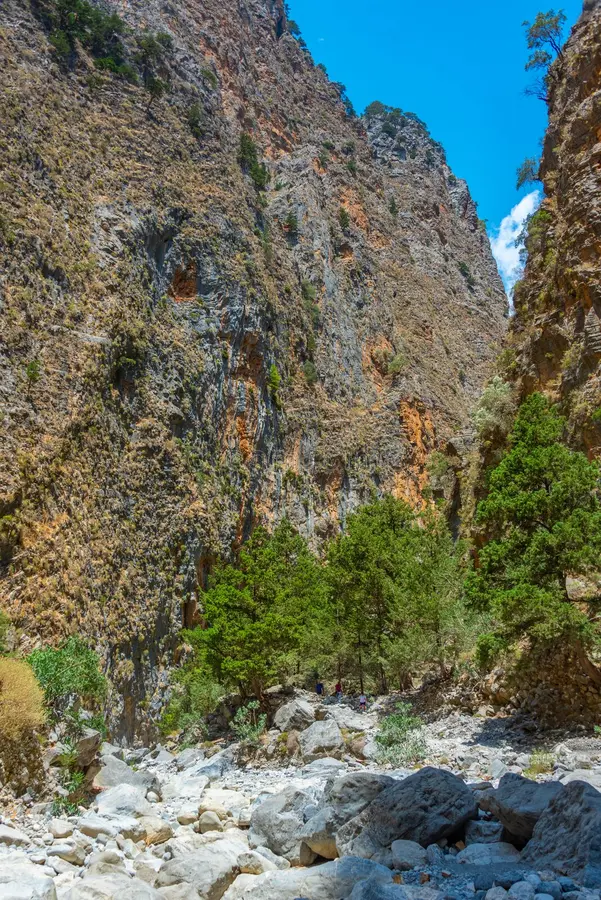
When you walk its rugged paths, you follow in the footsteps of shepherds, rebels, lovers, and outlaws. You cross a canyon that defied empires — from Saracen pirates and Venetian lords to Ottoman pashas and Nazi invaders.
Tips for Visiting Samaria Gorge
- Best season: Late spring (May–June) and early autumn (September) for cooler weather and lush surroundings.
- Entry point: Omalos Plateau; exit at Agia Roumeli on the Libyan Sea.
- Must-haves: Good hiking shoes, water, sun protection, and stamina.
- Bonus: After the hike, take a ferry to Sougia or Chora Sfakion for a well-earned swim and seafood lunch.

Allow me tell you a story of a girl named Aynur (which means Moon shinning).

Tucked into the lush foothills of the White Mountains…

When we think of Mediterranean cuisine, certain images come to mind…